
Frigidaire Dishwasher Instructions: A Comprehensive Guide (Updated 04/28/2026)
This guide, updated today – 04/28/2026 – offers detailed instructions for Frigidaire dishwashers, referencing resources like Manualzilla for comprehensive user manual access.

Understanding Your Frigidaire Dishwasher Model
Frigidaire offers a diverse range of dishwasher models, each designed with specific features to cater to varying kitchen needs and lifestyles. Identifying your exact model number is crucial for accessing the correct user manual and troubleshooting information.
This number, typically found on a label inside the dishwasher door or on the appliance’s exterior, unlocks a wealth of resources. Manualzilla, for instance, hosts a collection of Frigidaire dishwasher manuals, allowing you to pinpoint instructions tailored to your specific unit.
Understanding your model’s capabilities – from cycle options to rack adjustability – ensures optimal performance and longevity.
Locating the User Manual
Finding your Frigidaire dishwasher’s user manual is the first step towards maximizing its functionality and addressing any potential issues. While a physical copy may have been included with your purchase, digital versions are readily available online.
Websites like Manualzilla serve as valuable repositories, hosting a comprehensive collection of Frigidaire appliance manuals, including numerous dishwasher models. Simply search using your dishwasher’s model number to locate the corresponding document.
Alternatively, Frigidaire’s official website often provides downloadable manuals. Having access to the manual ensures you can confidently navigate all features and maintenance procedures.
Dishwasher Parts Identification
Understanding the key components of your Frigidaire dishwasher is crucial for effective operation and maintenance. Several parts work in harmony to deliver sparkling clean dishes. These include the spray arms, responsible for distributing water, and the filter system, which traps food particles.
The detergent dispenser automatically releases cleaning agents at the appropriate time, while the racks and their adjustments allow for flexible loading. Familiarizing yourself with these parts, as detailed in your user manual, will aid in troubleshooting and upkeep.
Spray Arms & Nozzles
Frigidaire dishwashers utilize rotating spray arms to deliver pressurized water for thorough cleaning. These arms feature strategically placed nozzles that target dishes from multiple angles. Regularly inspect the spray arms for clogs caused by food debris, as blockages reduce cleaning effectiveness.
Ensure free rotation; obstructions can be cleared with a toothpick or small wire. Some models have removable nozzles for deeper cleaning. Maintaining clear spray arms and nozzles is vital for optimal performance and preventing redeposit of food particles onto your dishes, ensuring a sparkling result.
Filter System
Frigidaire dishwashers incorporate a filter system to trap food particles and prevent them from recirculating during the wash cycle. This system typically consists of a coarse filter and a fine filter, working together to capture debris. Regular cleaning of the filter is crucial – at least monthly, or more often with heavy use – to maintain optimal dishwasher performance.
A clogged filter reduces water pressure and cleaning efficiency. Remove the filter (consult your user manual for specific instructions), rinse thoroughly under running water, and replace securely. Ignoring filter maintenance can lead to poor cleaning and potential drain blockage.
Detergent Dispenser
The Frigidaire dishwasher’s detergent dispenser automatically releases detergent during the wash cycle. It’s usually located inside the door, often with markings indicating the amount of detergent needed. Always use fresh dishwasher detergent and ensure the dispenser isn’t blocked or clogged.
Powder, gel, or pods can be used, but follow the detergent manufacturer’s instructions. Avoid overfilling, as this can lead to residue. Some models have a pre-wash compartment for heavily soiled dishes. A properly functioning dispenser ensures optimal cleaning results and prevents detergent from prematurely dissolving.
Racks & Adjustments
Frigidaire dishwashers feature adjustable racks designed for versatile loading. The upper rack often adjusts in height, accommodating taller items like glasses or vases. Lower rack tines are frequently foldable, creating space for larger pots and pans.
Proper rack adjustment maximizes washing capacity and ensures water reaches all surfaces. Check your model’s manual for specific adjustment mechanisms. Some racks also have specialized holders for stemware or utensils. Utilizing these features effectively leads to cleaner dishes and efficient use of dishwasher space.
Initial Setup & Installation
Before operating your Frigidaire dishwasher, proper setup is crucial. This involves connecting the water supply, installing the drainage hose, and establishing a secure electrical connection. Ensure the dishwasher is level to prevent leaks and ensure optimal performance.
Carefully follow the instructions in your user manual for each step. Incorrect installation can void the warranty and cause operational issues. Double-check all connections for tightness and proper sealing. A professional plumber or electrician is recommended if you’re unfamiliar with these procedures.
Water Supply Connection

Connecting the water supply is a vital step in Frigidaire dishwasher installation. Typically, a ½-inch or ¾-inch threaded connection is required to your home’s hot water line. Always use a new water supply hose – do not reuse old ones.
Ensure the water supply valve is turned off before connecting the hose. Tighten the connections securely, but avoid over-tightening, which can damage the fittings. Check for leaks immediately after turning the water supply back on. A slow drip can lead to significant water damage over time.
Drainage Hose Installation
Proper drainage hose installation is crucial for preventing water backup and ensuring efficient dishwasher operation. The drainage hose typically connects to your home’s garbage disposal or a dedicated drainpipe. Ensure the hose is not kinked or crushed, as this restricts water flow.
Securely attach the hose to the dishwasher and the drain connection using clamps. The hose should be elevated between the dishwasher and the drain to prevent backflow. Avoid a low loop; instead, maintain a high loop. Regularly inspect the hose for any signs of damage or leaks.
Electrical Connection
Connecting your Frigidaire dishwasher to a dedicated electrical circuit is paramount for safe and reliable operation. This appliance typically requires a 120V, 60Hz electrical supply. Never use an extension cord; a direct connection to a grounded outlet is essential.
Before connecting, ensure the power is OFF at the breaker. The dishwasher should be properly grounded according to local electrical codes. If you are uncomfortable with electrical work, consult a qualified electrician. Improper wiring can create a fire hazard or damage the appliance. Verify the voltage matches the dishwasher’s specifications.
Operating Instructions: Basic Cycles
Your Frigidaire dishwasher offers several pre-programmed cycles for optimal cleaning. The Normal cycle is ideal for everyday dish loads with moderate soil levels. For heavily soiled pots and pans, select the Heavy Duty cycle, which utilizes higher water temperatures and extended wash times.
Need a quick clean? The Quick Wash cycle provides a faster, shorter wash for lightly soiled dishes. Delicate items like glassware and china benefit from the Delicate/China cycle, employing a gentler wash action. Always refer to your model’s manual for specific cycle details.
Normal Cycle
The Normal cycle on your Frigidaire dishwasher is designed for daily use, effectively cleaning moderately soiled dishes. This cycle balances cleaning power with energy efficiency, making it a versatile choice for most loads. It typically utilizes a moderate water temperature and wash pressure to remove food residue.
To initiate, ensure dishes are properly loaded and detergent is added. Select the Normal cycle on the control panel and press start. Expect a cycle duration of approximately 120-150 minutes. This cycle is suitable for everyday plates, glasses, and cutlery.
Heavy Duty Cycle
The Heavy Duty cycle on your Frigidaire dishwasher is specifically engineered for tackling heavily soiled pots, pans, and casserole dishes. This cycle employs higher water temperatures and increased wash pressure to effectively remove baked-on food and stubborn residue. It’s ideal for items that require a more intense cleaning action.
Select the Heavy Duty cycle on the control panel after loading and adding detergent. Expect a longer cycle duration, typically between 180-210 minutes. This cycle is not recommended for delicate items, as the intense cleaning may cause damage.
Quick Wash Cycle
The Frigidaire Quick Wash cycle is designed for lightly soiled dishes that need a fast refresh. This cycle utilizes lower water temperatures and a shorter wash duration – typically around 30-45 minutes – making it perfect for everyday use when dishes aren’t heavily contaminated.
To activate, simply select the Quick Wash option on your dishwasher’s control panel. While convenient, remember this cycle may not effectively remove baked-on food or stubborn stains. It’s best suited for glasses, cups, and plates with minimal residue.
Delicate/China Cycle
The Frigidaire Delicate/China cycle is specifically engineered for your most fragile dishware, like fine china, crystal, and delicate glassware. This cycle employs the lowest water temperatures and gentlest spray action to prevent chipping, cracking, or damage.
Expect a longer wash duration compared to quicker cycles, ensuring thorough cleaning without harsh treatment. Avoid overloading the dishwasher when using this setting; proper spacing is crucial. Pre-rinsing heavily soiled items is recommended to maximize cleaning effectiveness and minimize risk. Select this cycle carefully for optimal protection.

Advanced Features & Cycles
Frigidaire dishwashers boast several advanced features designed to enhance cleaning performance and convenience. These include the Sanitize Option, utilizing higher temperatures to eliminate bacteria, and the Delay Start Function, allowing you to schedule washes for off-peak hours.
The Energy Saver Mode optimizes water and energy consumption, promoting eco-friendly operation. Furthermore, the Rinse Only Cycle is ideal for pre-washing dishes or rinsing items not suitable for a full wash cycle. Explore these features to tailor your dishwashing experience.
Sanitize Option

The Sanitize Option on your Frigidaire dishwasher elevates cleaning to a higher standard of hygiene. This cycle utilizes significantly increased water temperatures, reaching levels proven to eliminate 99.9% of common household bacteria.
Activation is typically achieved by pressing a dedicated “Sanitize” button alongside your desired wash cycle. This feature is particularly beneficial for baby bottles, cutting boards, and items requiring a thorough disinfection. Always consult your specific model’s manual for precise temperature details and recommended usage guidelines for optimal sanitization.
Delay Start Function
The Delay Start function offers unparalleled convenience, allowing you to schedule dishwasher operation to coincide with off-peak energy hours or your preferred timeframe. This feature is ideal for minimizing noise disruption or taking advantage of lower electricity rates.
To utilize Delay Start, simply press the designated “Delay” button and select your desired delay duration, typically in hours. The dishwasher will then automatically initiate the chosen cycle after the specified period. Remember to ensure the door is securely latched for the delay to function correctly.
Energy Saver Mode
Frigidaire dishwashers often include an Energy Saver Mode designed to optimize water and energy consumption during each wash cycle. This mode typically employs slightly longer wash times with reduced water temperatures, resulting in significant utility savings without compromising cleaning performance.
Activating Energy Saver Mode is usually achieved by pressing a dedicated button on the control panel, often indicated by an “Eco” or “Energy Saver” symbol. Utilizing this feature contributes to a more sustainable lifestyle and lowers your monthly bills. It’s a simple step towards environmentally conscious dishwashing!
Rinse Only Cycle
The Rinse Only cycle on your Frigidaire dishwasher is incredibly useful for pre-cleaning dishes, particularly when you don’t have a full load or intend to run a complete wash cycle immediately. This cycle utilizes water to rinse away food particles, preventing them from drying and becoming harder to remove later.
To initiate the Rinse Only cycle, select the corresponding option on the control panel. It’s ideal for items that have been sitting for a while or for temporarily storing dishes until a full load accumulates. Remember to use detergent in a subsequent cycle for thorough cleaning!
Loading the Dishwasher Correctly
Properly loading your Frigidaire dishwasher is crucial for optimal cleaning performance. Avoid overcrowding, ensuring water reaches all surfaces. Face soiled surfaces towards the spray arms for direct cleaning action. Larger items belong on the bottom rack, while delicate glassware and smaller items go on the top.
Ensure items don’t block the detergent dispenser or spray arms. Load plates and bowls with openings facing downwards. Avoid nesting items, allowing water to circulate freely. Correct loading maximizes efficiency and minimizes the need for re-washing, saving both time and energy.
Top Rack Loading Guidelines
The top rack is designed for delicate items like glasses, cups, and small bowls. Position these items securely, ensuring they won’t shift during the wash cycle. Avoid placing tall items that could obstruct the spray arm’s rotation. Utilize adjustable tines to accommodate various sizes and shapes.
Plastic items should also be placed on the top rack, as they are more susceptible to heat damage. Ensure plastics don’t block the detergent dispenser. Load cups facing downwards for effective cleaning and drainage. Proper top rack loading prevents breakage and ensures sparkling results.
Bottom Rack Loading Guidelines
The bottom rack is ideal for larger, heavier items like pots, pans, and plates. Face soiled surfaces towards the center for optimal cleaning. Securely load these items, preventing movement during operation. Avoid overcrowding, allowing water to reach all surfaces.
Larger items shouldn’t block the spray arm. Utilize the foldable tines to accommodate oversized cookware. Ensure tall items don’t impede the detergent dispenser’s access. Proper bottom rack loading maximizes cleaning efficiency and prevents re-washing. Load plates and bowls facing the center for best results.
Silverware Basket Usage
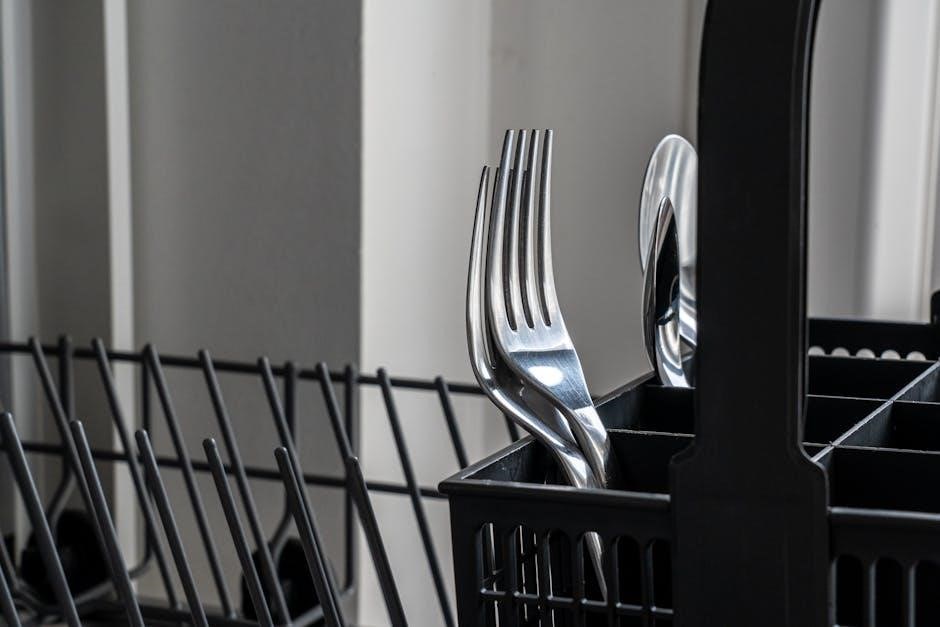
The silverware basket is designed to securely hold forks, spoons, and knives during the wash cycle. Alternate utensil placement – handles down for spoons and forks, handles up for knives – to prevent nesting and ensure thorough cleaning. Separate silver from stainless steel to avoid potential corrosion.
If your basket has dividers, utilize them to keep utensil types separate. Avoid overloading the basket, allowing water to circulate freely. Long utensils can be laid flat if the basket lacks sufficient space. Proper silverware loading prevents damage and ensures sparkling clean results.
Detergent & Rinse Aid Usage
Optimal dishwasher performance relies on using the correct detergent and rinse aid. Frigidaire dishwashers are compatible with powder, gel, and pac detergents; however, always check your model’s manual for specific recommendations. Avoid using hand dish soap, as it creates excessive suds.
Rinse aid is crucial for spotless dishes and faster drying. It reduces water spots and film, enhancing cleaning results. Fill the rinse aid dispenser according to the manufacturer’s instructions, adjusting the dosage based on water hardness. Proper detergent and rinse aid usage guarantees sparkling clean and dry dishes every time.
Recommended Detergents
Frigidaire dishwashers perform best with high-quality detergents designed for automatic dishwashing machines. Powder, gel, and pac detergents are generally suitable, but pacs offer pre-measured convenience. Leading brands like Cascade, Finish, and Seventh Generation are frequently recommended by users and often yield excellent results.
Consider detergents with enzymes for enhanced stain removal, particularly for food residue. Avoid detergents containing chlorine bleach if you have stainless steel interiors, as it can cause pitting. Always follow the detergent manufacturer’s instructions for proper dosage and usage to maximize cleaning power.
Detergent Amount Guidelines
The ideal detergent amount depends on water hardness and soil level. For soft water, use less detergent; for hard water, increase the amount slightly. Generally, 1-2 tablespoons of powder or gel detergent are sufficient for a full load. If using pacs, one pac is typically adequate, regardless of load size.
Overusing detergent can leave residue on dishes and inside the dishwasher. Refer to your detergent packaging for specific recommendations based on water conditions. Frigidaire dishwashers often have markings inside the detergent dispenser to guide dosage.
Rinse Aid Benefits & Filling
Rinse aid significantly improves drying performance, reduces water spots, and enhances the overall shine of your dishes. It works by lowering the surface tension of water, allowing it to sheet off dishes more effectively. Your Frigidaire dishwasher has a dedicated rinse aid dispenser, usually located near the detergent compartment.
To fill, open the dispenser cap and pour rinse aid until the indicator window shows full. Adjust the rinse aid level using the control dial, typically ranging from 1 to 6; start with a mid-range setting and adjust as needed. Regularly check and refill the dispenser for optimal results.
Troubleshooting Common Issues
Encountering problems with your Frigidaire dishwasher? Several issues are easily resolved. If the dishwasher won’t start, check the power supply, door latch, and control panel lock. Poor cleaning often stems from improper loading, insufficient detergent, or clogged spray arms. Leaks can indicate a damaged door gasket, loose connections, or over-sudsing.
Unusual noises might signal foreign objects in the pump or a failing motor. Consult your user manual for specific error codes and solutions. If problems persist, contact a qualified appliance repair technician for assistance.
Dishwasher Not Starting

If your Frigidaire dishwasher fails to start, begin with the simplest checks. Ensure the power cord is securely plugged into a functioning outlet. Verify the circuit breaker hasn’t tripped. Confirm the door is fully latched; a slightly ajar door prevents operation. Check the control panel lock feature – it may be activated, disabling the start function.
Also, examine the water supply; insufficient water pressure can halt the cycle. If these steps don’t resolve the issue, consult the user manual for error codes or contact a service technician.
Poor Cleaning Performance
Experiencing unsatisfactory cleaning results? First, ensure proper loading – avoid overcrowding and blockages. Verify the spray arms rotate freely and aren’t clogged with food particles. Check the filter for debris; a dirty filter significantly reduces cleaning efficiency. Confirm you’re using the correct amount of detergent, and that it’s fresh.
Consider water temperature; hot water is crucial for effective cleaning. If issues persist, run a dishwasher cleaner cycle to remove buildup. Consult your user manual for specific troubleshooting steps related to your model.
Dishwasher Leaking
Discovering a leak from your Frigidaire dishwasher requires immediate attention. Initially, inspect the door gasket for damage or debris preventing a tight seal. Check the water supply and drain hoses for cracks or loose connections. Ensure the dishwasher is level; an uneven unit can cause water spillage.

Examine the spray arms and internal connections for potential leak sources. If the leak persists, carefully observe its location during a cycle to pinpoint the origin. Consult your user manual for diagrams and specific troubleshooting guidance for your model.
Unusual Noises
Strange sounds emanating from your Frigidaire dishwasher can indicate various issues. A grinding noise might suggest food particles obstructing the drain pump or spray arms. Rattling sounds could be caused by improperly loaded dishes or loose items within the racks. Humming noises often point to a problem with the wash motor.
Listen carefully to determine when the noise occurs during the cycle. Check for obstructions in the filter and spray arms. If the noise persists, consult your user manual for specific troubleshooting steps related to your dishwasher model, and consider professional assistance.
Cleaning & Maintenance
Regular cleaning and maintenance are crucial for optimal Frigidaire dishwasher performance and longevity. This involves consistent attention to several key areas. Filter cleaning should be performed monthly to remove food debris and prevent clogs, ensuring efficient drainage. Spray arms require periodic inspection and cleaning of nozzles to maintain proper water distribution.
Exterior surfaces can be wiped down with a damp cloth and mild detergent. Interior cleaning, using a dishwasher cleaner, helps eliminate odors and buildup. Following these steps will keep your Frigidaire dishwasher functioning effectively.
Filter Cleaning Procedure
Maintaining a clean filter is vital for your Frigidaire dishwasher’s performance. First, remove the lower rack to access the filter assembly, typically located at the bottom of the dishwasher tub. Twist and lift the filter components – usually a cylindrical filter and a flat mesh filter – to remove them.
Rinse the filters under warm running water, using a soft brush to remove stubborn food particles. Inspect for any damage and replace if necessary. Reinstall the filters, ensuring they are securely locked into place. Regular cleaning, ideally monthly, prevents clogs and ensures efficient operation.
Spray Arm Cleaning
Clogged spray arms significantly reduce cleaning effectiveness. To clean, locate the upper and lower spray arms inside the dishwasher. You may need to remove the upper spray arm by unscrewing it or releasing a locking mechanism. Carefully detach the spray arms and inspect the nozzles for blockages.
Use a toothpick or small wire to clear any debris from the nozzles. Rinse the spray arms thoroughly under running water to remove dislodged particles. Reattach the spray arms, ensuring they rotate freely. Regular cleaning, every few months, maintains optimal water distribution and cleaning power.
Exterior Cleaning
Maintaining a clean exterior enhances your kitchen’s appearance and prevents grime buildup. Always disconnect power before cleaning. Use a mild dish soap solution and a soft cloth to wipe down the dishwasher’s door, sides, and control panel. Avoid abrasive cleaners, as they can scratch the finish.
For stainless steel models, use a stainless steel cleaner and polish in the direction of the grain. Rinse thoroughly with a clean, damp cloth and dry immediately to prevent water spots. Pay attention to the handle and edges where fingerprints accumulate. Regular exterior cleaning keeps your Frigidaire dishwasher looking its best.
Dishwasher Interior Cleaning
Regular interior cleaning prevents odors and ensures optimal performance. After each use, check for food particles and remove them. Monthly, run an empty dishwasher cycle with a dishwasher cleaner or two cups of white vinegar placed in a dishwasher-safe bowl on the top rack.
Avoid using bleach, as it can damage interior components. Wipe down the door gasket with a damp cloth to remove any buildup. Inspect the spray arms and filter regularly, cleaning them as described in their respective sections. A clean interior contributes to sparkling clean dishes.