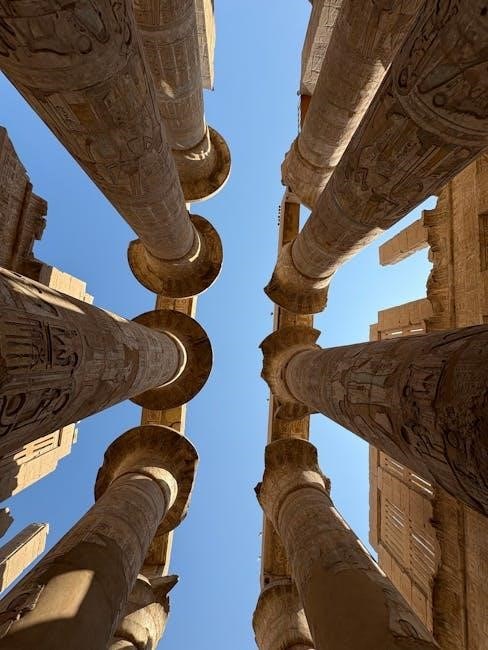
Persepolis: An Architectural and Historical Overview (Filetype:PDF Focus)
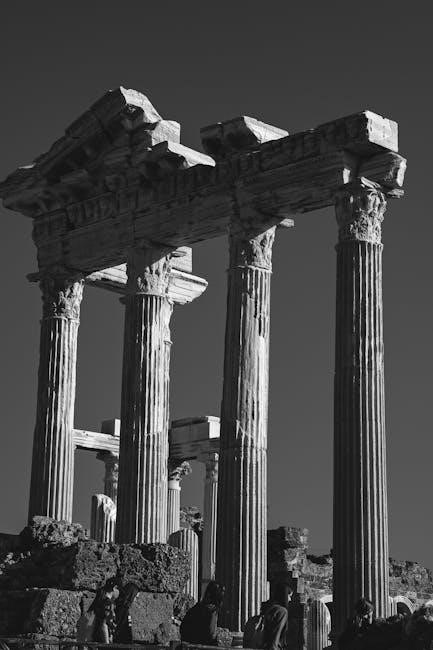
Persepolis, a lavish complex, uniquely stands within the Near East, documented in numerous PDF files detailing its stone architecture and imperial grandeur.
Research, spanning from 2009 to 2025, highlights architectural courage and influence on surrounding lands, accessible through digital archives.
Persepolis, a UNESCO World Heritage site, represents a monumental achievement of the ancient world, extensively documented in readily available PDF formats. These digital resources offer a comprehensive exploration of its architectural intricacies and historical significance, making it accessible to scholars and enthusiasts alike.
The city, formally known as Parsa, served as the ceremonial capital of the Achaemenid Empire, a testament to the empire’s power and artistic prowess. Numerous scholarly articles, often found as PDF downloads, detail the site’s construction, beginning under Darius I around 518 BC, and its subsequent expansion by subsequent rulers.
The available PDF literature emphasizes Persepolis’s unique blend of architectural styles, drawing influences from across the empire – Mesopotamia, Egypt, and Lydia – yet forging a distinctly Persian aesthetic. The scale of the complex, with its grand palaces, audience halls, and intricate relief carvings, is a recurring theme in these digital publications.
Early archaeological investigations, notably those led by Professor Herzfeld, are thoroughly chronicled in PDF reports, detailing the challenges and discoveries of the initial excavations. Modern research, utilizing advanced techniques, continues to refine our understanding of Persepolis, with findings frequently published in accessible PDF formats. The site embodies a curated relationship between ancient ruins and contemporary perspectives, as explored in recent analyses available online.
II. Historical Context of Persepolis
The historical narrative of Persepolis is richly detailed in numerous PDF documents, tracing its origins to the 6th century BC under the Achaemenid dynasty. These resources highlight the strategic decision to establish a new ceremonial center in the region of Pars, modern-day Iran, shifting from earlier capitals like Pasargadae.
PDF analyses reveal that Persepolis wasn’t intended as a residential city, but rather a showcase of imperial power and a focal point for Nowruz celebrations and royal audiences. The construction spanned several reigns, with Darius I initiating the project and his successors, Xerxes I and Artaxerxes I, continuing its expansion, as evidenced in archaeological reports available as PDFs.
The site’s historical significance is underscored by the intricate relief carvings depicting tribute bearers from across the vast Achaemenid Empire. These depictions, meticulously documented in PDF publications, offer invaluable insights into the empire’s diverse cultures and economic reach.
The eventual sack of Persepolis by Alexander the Great in 330 BC marked a turning point, leading to its abandonment and gradual decline. Historical accounts of this event, often found in digitized PDF versions of classical texts, detail the destruction and looting of the city. Despite this, the ruins continued to hold symbolic importance, influencing subsequent architectural styles, as explored in comparative studies available in PDF format.
III. The Achaemenid Empire and its Founding of Persepolis
PDF documents detailing the Achaemenid Empire consistently emphasize its founder, Cyrus the Great, and his initial capital at Pasargadae. However, Darius I, seeking a more monumental expression of imperial power, initiated the construction of Persepolis around 518 BC. These PDF resources highlight a deliberate shift in focus, aiming to create a ceremonial center distinct from the earlier, more functional capital.
The empire’s vast reach, spanning from Egypt and Anatolia to the Indus Valley, is vividly illustrated in the tribute depictions found at Persepolis, extensively analyzed in archaeological PDF reports. These reliefs showcase the diverse peoples and resources controlled by the Achaemenids, demonstrating the empire’s administrative and economic prowess.
PDF analyses reveal Darius I’s inscription at Naqsh-e Rustam explicitly states his intention to build Persepolis as a magnificent city, “the city of Persians.” This inscription, often reproduced in digital PDF archives, underscores the city’s symbolic importance as a representation of Achaemenid identity and authority.
Successive Achaemenid rulers continued to embellish Persepolis, adding new structures and decorations, as documented in detailed architectural PDF studies. The empire’s wealth and artistic sophistication are evident in the intricate carvings and monumental scale of the complex, solidifying its place as a testament to Achaemenid grandeur.
IV. Persepolis as a Ceremonial Capital
PDF analyses of Persepolis consistently portray it not as an administrative center, but as a magnificent ceremonial capital, primarily used for Nowruz celebrations and royal audiences. Archaeological PDF reports detail the lack of evidence for a permanent, large-scale administrative bureaucracy within the city walls, reinforcing this interpretation.
The Apadana Palace, extensively documented in architectural PDFs, served as the grand hall for receiving tribute and hosting dignitaries. The reliefs depicting representatives from various nations bringing gifts, readily available in digital PDF formats, visually demonstrate the ceremonial function of the palace.
PDF studies highlight the city’s layout, designed to impress visitors with its scale and grandeur. The monumental stairways, towering columns, and intricate carvings were intended to convey the power and prestige of the Achaemenid Empire, as illustrated in numerous photographic PDFs.
The Throne Hall (Tachara), detailed in structural PDF analyses, likely hosted royal audiences and important ceremonies. Its imposing presence and symbolic decorations further emphasize Persepolis’s role as a stage for displaying imperial authority. The city’s function was to project an image of divine order and imperial grandeur, a theme consistently explored in scholarly PDF publications.
V. Architectural Innovations in Persepolis
PDF documentation reveals Persepolis showcased remarkable architectural innovations for its time, blending various influences into a unique Achaemenid style. Detailed structural PDFs demonstrate a sophisticated understanding of engineering and design, particularly in the use of stone and timber.
The city’s column capitals, often depicting animal forms, are a distinctive feature, extensively illustrated in architectural PDFs. These capitals, along with the elaborate relief carvings, demonstrate a high level of artistic skill and craftsmanship, as showcased in digital PDF archives.
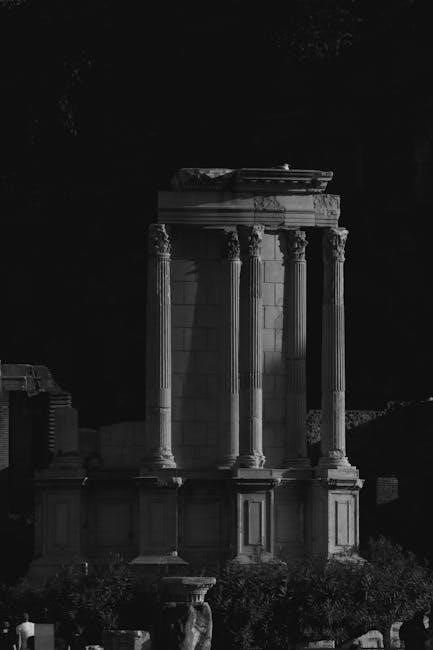
PDF analyses highlight the innovative use of post-and-lintel construction, allowing for large, open spaces within the palaces. The absence of arches and vaults, common in later periods, is a key characteristic, thoroughly explained in comparative architectural PDFs.
The integration of wood and timber roofing, detailed in specialized PDF reports, was crucial for spanning large areas. While the original wooden structures are largely lost, PDF reconstructions based on archaeological evidence offer insights into their construction. The “Persian polish” on stone, noted in comparative PDFs referencing Indian rock-cut structures, represents a unique surface treatment.
VI. The Role of Wood and Timber Roofing in Persepolis Architecture
PDF analyses of Persepolis reveal wood and timber played a pivotal, though largely vanished, role in its architectural design. These materials were essential for roofing the vast halls and palaces, as detailed in numerous archaeological PDF reports.
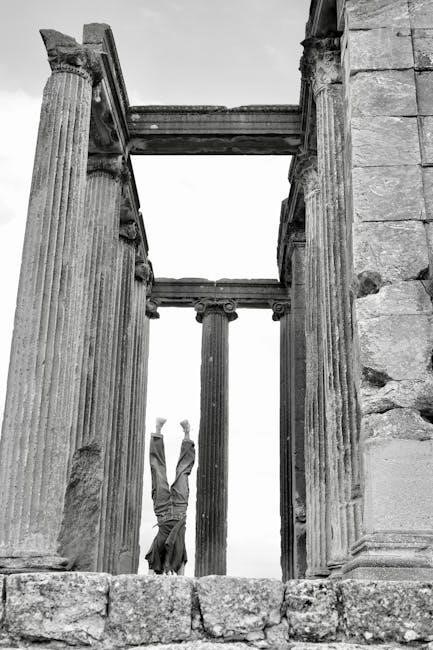
While the original wooden structures haven’t survived, PDF reconstructions, based on archaeological evidence like post holes and impressions, suggest a sophisticated timber framework. These PDF models illustrate how cedar wood, likely imported, was used to create expansive, columned roofs.
Specialized PDF studies demonstrate the timber roofing wasn’t merely functional; it contributed to the aesthetic of the buildings. The wooden beams were likely adorned with carvings and painted, enhancing the interior spaces, as suggested by fragmented evidence in PDF documentation.
PDF research indicates a complex system of interlocking beams and supports, showcasing advanced carpentry skills. The reliance on wood also highlights the logistical challenges of sourcing and transporting these materials to Persepolis, a topic explored in logistical PDF analyses. The article from 2018 specifically tried to revitalize this aspect of the architecture.
VII. Stone Architecture and Material Culture at Persepolis
Persepolis’s enduring legacy rests heavily on its magnificent stone architecture, extensively documented in available PDF resources. These PDF files detail the use of limestone, primarily sourced locally, for constructing monumental structures like the Apadana Palace and the Throne Hall.
PDF analyses reveal a mastery of stone carving and craftsmanship. Reliefs depicting processions of tribute bearers, animals, and mythological figures adorn the stone walls, showcasing the Achaemenid Empire’s artistic prowess, as illustrated in detailed PDF image collections.
Beyond the grand structures, PDF reports highlight the material culture embedded within the stone elements. Fragments of pottery, metalwork, and other artifacts discovered within the stone foundations provide insights into daily life and ritual practices, as cataloged in archaeological PDF inventories.
The “Persian polish” – a distinctive sheen on the stone surfaces – is a recurring theme in PDF studies, linking Persepolis’s stonework to early Indian rock-cut structures like the Barabar Caves. These PDF comparisons demonstrate cultural exchange and shared architectural techniques. The lavish complex, as described in PDF reports, was truly unique in the Near East.
VIII. Key Structures within Persepolis
Persepolis encompassed numerous monumental buildings, meticulously detailed in accessible PDF documentation. Central to the complex were the Apadana Palace and the Tachara (Throne Hall), both extensively analyzed in archaeological PDF reports.
The Apadana Palace, a grand hall for audiences, is thoroughly illustrated in PDF architectural plans and reconstructions. These PDFs showcase its massive hypostyle hall, supported by numerous columns, and adorned with elaborate relief carvings depicting tribute processions. PDF analyses emphasize its ceremonial function.
The Tachara, the imperial seat of power, is equally well-documented in PDF files. PDF images reveal its imposing stone structure and its role as a venue for royal receptions and ceremonies. Detailed PDF inventories catalog the artifacts discovered within the Tachara, offering insights into court life.
Beyond these primary structures, PDF resources detail other significant buildings, including gateways, treasuries, and residential quarters. These PDFs collectively paint a picture of a meticulously planned city, embodying divine order and imperial grandeur, as highlighted in numerous scholarly PDF publications.
IX. The Apadana Palace: Grand Hall of Audiences
The Apadana Palace, a cornerstone of Persepolis, is extensively documented in available PDF resources. These PDFs detail its function as a grand hall for royal audiences and ceremonial gatherings, showcasing the empire’s power and prestige.
Architectural PDFs reveal a massive hypostyle hall, supported by 36 columns, each elaborately carved. PDF reconstructions illustrate the original splendor of the palace, including its roof – likely constructed with wood and timber, as detailed in specialized PDF studies.
Perhaps most iconic are the relief carvings adorning the palace walls, meticulously cataloged in PDF inventories. These PDFs depict representatives from various nations bringing tribute to the Achaemenid king, symbolizing the empire’s vast reach. PDF analyses interpret these reliefs as powerful statements of imperial authority.
Detailed PDF plans and sections provide insights into the palace’s layout and construction techniques. Scholarly PDF articles explore the palace’s symbolic significance, linking its design to concepts of divine order and imperial grandeur, solidifying its place in Achaemenid history.
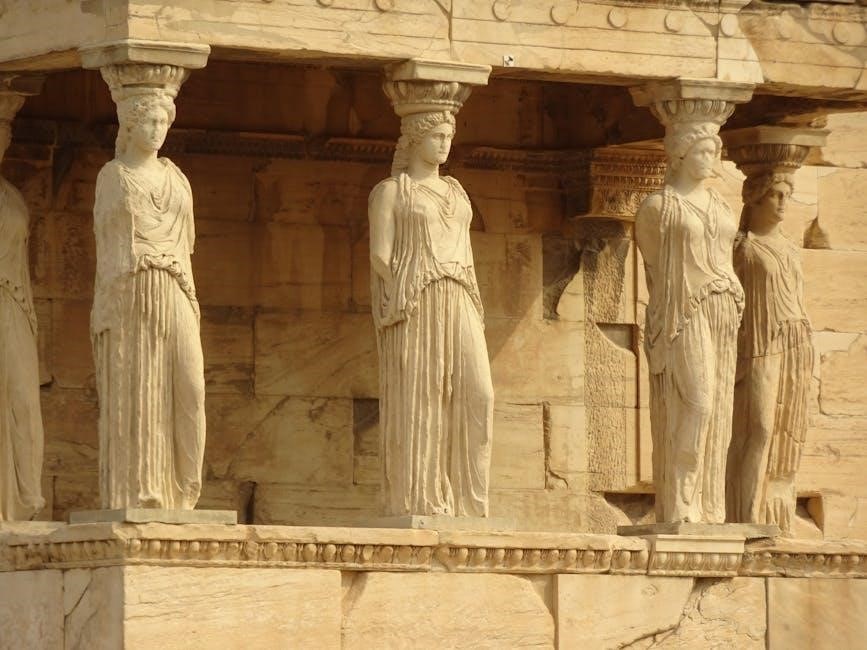
X; The Throne Hall (Tachara): Imperial Seat of Power
The Tachara, known as the Throne Hall, represents the heart of Achaemenid power at Persepolis, with its architectural details thoroughly preserved in numerous PDF documents. These PDFs illustrate its role as the formal imperial seat, used for significant state occasions and royal decrees.
PDF analyses reveal a large, rectangular hall, distinguished by its eight massive stone columns supporting a roof – construction techniques explored in dedicated PDF reports. The hall’s layout, as depicted in PDF plans, emphasizes the king’s central position and authority.
Relief carvings within the Tachara, meticulously documented in PDF inventories, showcase royal audiences and symbolic imagery of power. PDF interpretations suggest these carvings reinforced the king’s divine right to rule and the empire’s dominance.
Scholarly PDF articles delve into the hall’s functional interpretations, re-evaluating its use beyond simple audiences. Detailed PDF reconstructions offer a glimpse into the hall’s original grandeur, highlighting its importance within the broader complex of Persepolis.
XI. Influences on Persepolis Architecture
Persepolis’s architectural design wasn’t isolated; detailed PDF analyses reveal significant influences from various cultures, shaping its unique aesthetic. Numerous PDF reports highlight connections to earlier Mesopotamian palace structures, particularly in layout and monumental scale.
A key influence, extensively documented in PDF studies, is the impact of Egyptian architecture, evident in the use of columns and relief carvings. These PDFs showcase stylistic similarities, suggesting cultural exchange and artistic inspiration.
Notably, PDF research points to a fascinating link between Persepolis and Indian rock-cut structures, specifically the Barabar Caves. PDF comparisons reveal the shared “Persian polish” on the stone, indicating potential architectural transmission.
Furthermore, PDF articles explore the influence of Persepolis on the South Caucasus and surrounding lands, demonstrating its widespread impact. These PDFs illustrate the adoption of Achaemenid architectural elements in regional building traditions, solidifying Persepolis’s legacy.
XII. Persian Polish and Connections to Indian Rock-Cut Structures (Barabar Caves)
Detailed PDF analyses reveal a striking similarity between the stone finishing techniques employed at Persepolis and those found in the early rock-cut structures of India, most notably the Barabar Caves. This “Persian polish,” as documented in numerous PDF reports, refers to a highly refined surface treatment achieved through meticulous polishing of the stone.
PDF research suggests this wasn’t merely a coincidental aesthetic choice, but rather a deliberate technique reflecting shared architectural knowledge or even direct influence. The Barabar Caves, the earliest examples of Indian rock-cut architecture, exhibit a verisimilitude to Persian methods, as highlighted in several PDF studies.
These PDFs propose potential explanations, including the movement of skilled artisans between the Achaemenid Empire and the Indian subcontinent. The consistent application of this polish, detailed in PDF diagrams, suggests a standardized practice.
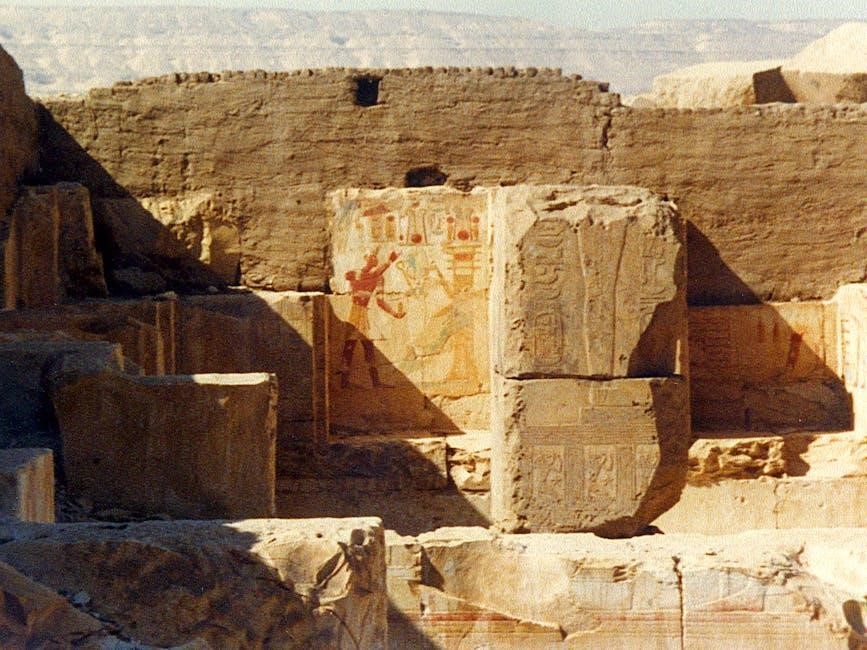
Further PDF investigations explore the implications of this connection, suggesting a broader network of cultural and technological exchange during the Achaemenid period, solidifying Persepolis’s role as a hub of architectural innovation.
XIII. Influence of Persepolis on the South Caucasus and Surrounding Lands
Numerous PDF documents detail the significant architectural and artistic influence of Persepolis extending into the South Caucasus and neighboring regions. These PDF analyses demonstrate how elements of Achaemenid material culture, originating from Persepolis, were adopted and adapted by local cultures.
PDF reports highlight the transmission of architectural styles, decorative motifs, and construction techniques. The influence isn’t limited to grand structures; PDFs showcase its impact on smaller-scale art and craftsmanship throughout the area.
Several PDF studies focus on specific examples, such as the adoption of column designs and relief sculptures reminiscent of those found at Persepolis. These PDFs often include comparative analyses, visually demonstrating the similarities.
Furthermore, PDF research suggests that Persepolis served as a model for palatial architecture and urban planning in the region. The extent of this influence, as detailed in various PDFs, underscores Persepolis’s importance as a cultural and artistic center within the ancient world, leaving a lasting legacy.
XIV. Archaeological Investigations at Persepolis
PDF archives reveal a rich history of archaeological investigation at Persepolis, beginning with pioneering work. Early excavations, extensively documented in PDF reports, were significantly shaped by Professor Herzfeld, who became the first field director at the site, as detailed in a 184-page PDF.
These initial PDF-accessible reports outline his methods and early discoveries, laying the groundwork for future research. Later, modern archaeological research, also available in PDF format, employs advanced techniques, including digital mapping and material analysis, to refine our understanding of the site.
Numerous PDF publications showcase the evolution of archaeological approaches at Persepolis, from early, often less systematic, excavations to contemporary, highly scientific investigations. These PDFs demonstrate a growing emphasis on contextual analysis and preservation.
Current PDF-based research focuses on re-evaluating past findings and uncovering new insights into the site’s history and function. The wealth of PDF documentation ensures that the ongoing investigation of Persepolis remains accessible to scholars worldwide.
XV. Early Excavations and the Role of Professor Herzfeld
PDF documents detail Professor Herzfeld’s pivotal role in the early archaeological investigations at Persepolis. Thanks to cooperation from the German Government, Herzfeld became the Institute’s first field director, initiating systematic work at the site, as evidenced in a comprehensive 184-page PDF report.
Early PDF-accessible excavation reports showcase his initial focus on documenting the architectural remains and understanding the site’s layout. These PDFs reveal his meticulous approach to recording details, though methods differed significantly from modern techniques.
Herzfeld’s work, extensively covered in available PDF publications, faced challenges, including logistical difficulties and limited funding. Despite these obstacles, his early excavations laid a crucial foundation for subsequent research, as highlighted in various scholarly PDFs.
His contributions, thoroughly documented in PDF archives, established Persepolis as a significant archaeological site, attracting further investigation. The PDF records demonstrate his dedication to preserving and understanding this ancient capital, shaping future archaeological endeavors.
XVI. Modern Archaeological Research and Techniques
Contemporary archaeological research at Persepolis, extensively documented in accessible PDF reports, employs advanced techniques vastly different from early excavations. These PDFs showcase the integration of digital technologies, including 3D modeling and Geographic Information Systems (GIS), for site mapping and reconstruction.
Modern PDF-based research utilizes non-invasive methods like ground-penetrating radar and aerial photography to identify subsurface features without extensive digging. These techniques, detailed in numerous PDF publications, minimize disturbance to the site and provide a broader understanding of the complex.
Analysis of material culture, presented in detailed PDF reports, now incorporates scientific dating methods like radiocarbon dating and archaeomagnetic dating, offering more precise chronologies. PDF archives reveal interdisciplinary collaboration, involving archaeologists, art historians, and material scientists.
The focus has shifted towards contextualizing Persepolis within the broader Achaemenid Empire, with research findings readily available in scholarly PDFs. These modern approaches, outlined in various PDF documents, aim for a holistic understanding of the site’s history, function, and significance.
XVII. Architectural Terminology and Functional Interpretations
Recent scholarly work, readily available in PDF format, presents a critical re-evaluation of architectural terminology previously applied to Persepolis’s palatial structures. Traditional interpretations of function are being challenged, with PDF reports detailing nuanced understandings of space and purpose.
The PDF archives demonstrate a move away from simplistic designations like “throne hall” or “audience hall,” towards more complex analyses of how spaces were actually used. Researchers, as evidenced in numerous PDF publications, are examining evidence for ritual practices, administrative functions, and residential areas.
PDF documents highlight the importance of considering the symbolic meaning embedded within the architecture. The arrangement of spaces, the use of relief sculpture, and the orientation of buildings are all being re-interpreted through a lens of Achaemenid ideology.
Furthermore, PDF-based studies are investigating the relationship between architectural form and social hierarchy. The scale and decoration of different structures are being analyzed to understand how power was expressed and negotiated at Persepolis. This ongoing reassessment, detailed in accessible PDFs, is reshaping our understanding of the site.
XVIII. Re-evaluation of Palatial Structure Functions
PDF analyses reveal a significant re-evaluation of the functions traditionally assigned to Persepolis’s palatial structures. Early interpretations, often based on comparative studies with other ancient palaces, are now being questioned through detailed examination of archaeological evidence presented in numerous PDF reports.
PDF documentation highlights that the Apadana and Tachara, for example, likely served multiple purposes beyond simply royal audiences and ceremonies. Evidence suggests administrative, economic, and even religious functions were integrated within these spaces, as detailed in accessible PDF publications.
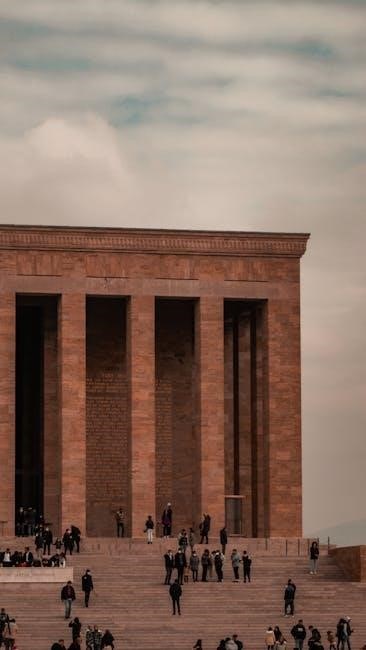
Researchers, utilizing PDF-accessible data, are focusing on the logistical challenges of hosting large gatherings and managing the flow of people and goods through the complex. This has led to a reassessment of the role of ancillary structures and courtyards.
Furthermore, PDF-based studies are exploring the possibility that certain palatial structures were used seasonally or for specific festivals, challenging the notion of a fixed, year-round function. This ongoing reassessment, readily available in PDF format, is providing a more nuanced understanding of Persepolis’s operational dynamics.
XIX. Persepolis and Divine Order/Imperial Grandeur
PDF resources consistently emphasize that Persepolis wasn’t merely an administrative center, but a deliberate manifestation of Achaemenid imperial ideology – a physical embodiment of divine order and absolute power. Accessible PDF analyses detail how every aspect of the city’s design, from its monumental scale to its intricate relief carvings, served to project an image of unparalleled grandeur.
The city’s layout, as illustrated in numerous PDF diagrams, reflects a cosmological worldview, aligning with Zoroastrian beliefs about the universe and the king’s role as a divinely appointed ruler. PDF documentation showcases how the Apadana’s procession of tribute bearers symbolized the empire’s vast reach and the submission of diverse peoples.
The meticulous craftsmanship and use of luxurious materials, thoroughly documented in PDF reports, further reinforced the message of imperial wealth and sophistication. PDF studies reveal that the very act of constructing Persepolis was a demonstration of the king’s power to mobilize resources and command labor.
Ultimately, Persepolis, as presented in extensive PDF archives, functioned as a potent symbol of Achaemenid authority, designed to inspire awe and reinforce the legitimacy of the empire.
XX. Contemporary Perspectives on Persepolis
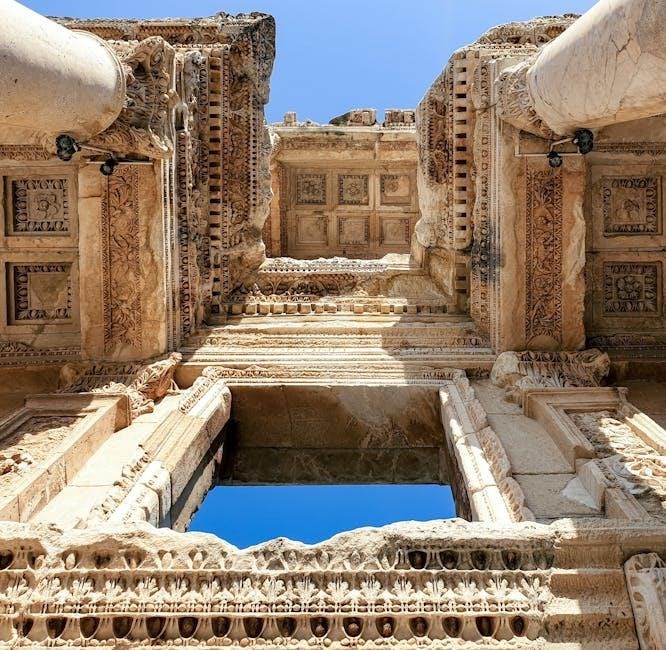
Contemporary scholarship, readily available in PDF format, increasingly examines Persepolis not in isolation, but within the context of its surrounding landscape and its relationship to both pre-Islamic ancient ruins and modern installations. PDF analyses explore how the site is perceived and utilized today, moving beyond purely archaeological interpretations.
Several PDF publications detail the complex interplay between preservation efforts and the demands of tourism, highlighting the challenges of balancing cultural heritage with economic development. PDF reports also investigate the ways in which Persepolis has been appropriated and re-interpreted in modern Iranian national identity.
Furthermore, contemporary PDF research focuses on the curated relationship between the ancient ruins and adjacent contemporary installations, analyzing how this juxtaposition shapes our understanding of the past. PDF documents showcase debates surrounding restoration projects and the ethics of intervention at the site.
These modern perspectives, accessible through digital PDF archives, demonstrate that Persepolis remains a dynamic and contested space, continually re-evaluated and re-imagined in the present day.
XXI. Persepolis in Relation to Pre-Islamic Ancient Ruins and Modern Installations
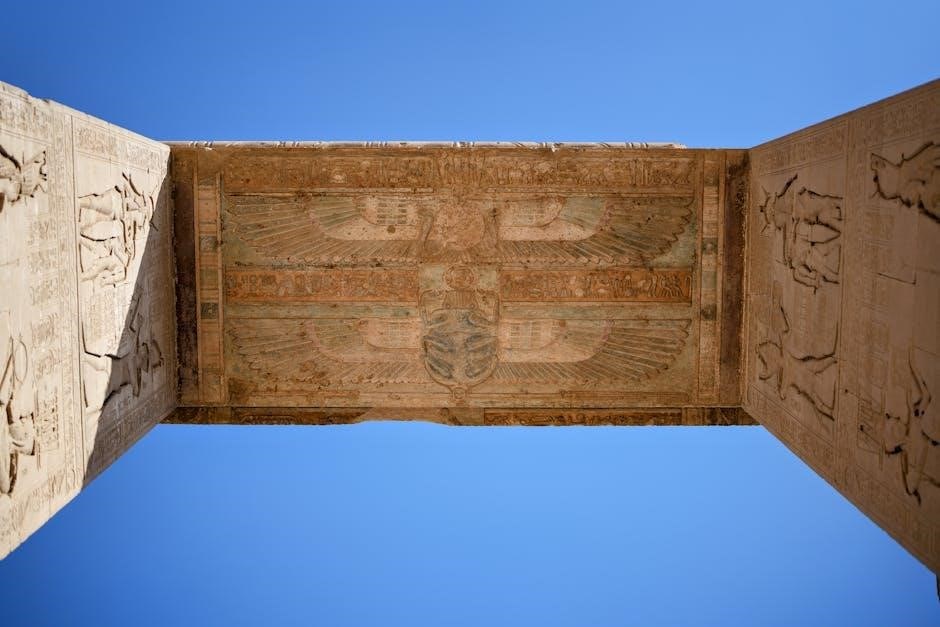
Recent PDF studies emphasize examining Persepolis alongside other pre-Islamic ancient ruins in Iran, revealing patterns of architectural influence and cultural exchange. These PDF analyses demonstrate how Persepolis wasn’t an isolated phenomenon, but part of a broader network of ancient settlements.
Furthermore, PDF documentation details the increasingly significant relationship between the ancient site and modern installations in the surrounding area. This includes infrastructure projects, tourism facilities, and even contemporary art installations, all impacting the site’s context.
Scholarly PDF reports explore how this juxtaposition – ancient ruins and modern structures – is conceived, contested, and re-invoked. The curated relationship is not neutral; it’s a site of negotiation between heritage preservation, national identity, and contemporary development.
PDF research highlights the challenges of integrating Persepolis into the modern landscape while preserving its historical integrity. The interplay between the past and present, as documented in these digital archives, reveals a complex and evolving dynamic.
XXII. Conclusion: Persepolis’s Lasting Legacy
Persepolis, as detailed in numerous PDF documents, remains a potent symbol of the Achaemenid Empire’s power and artistic achievement. Its architectural innovations, meticulously documented in scholarly PDF reports, continue to inspire awe and investigation.
The wealth of information available in PDF format – from early excavations by Professor Herzfeld to modern archaeological research – underscores the site’s enduring importance. These digital archives reveal a continuous process of discovery and re-evaluation.
PDF analyses demonstrate that Persepolis’s influence extends beyond its immediate geographical region, impacting architectural styles and artistic traditions in the South Caucasus and even India, as evidenced by the Barabar caves.
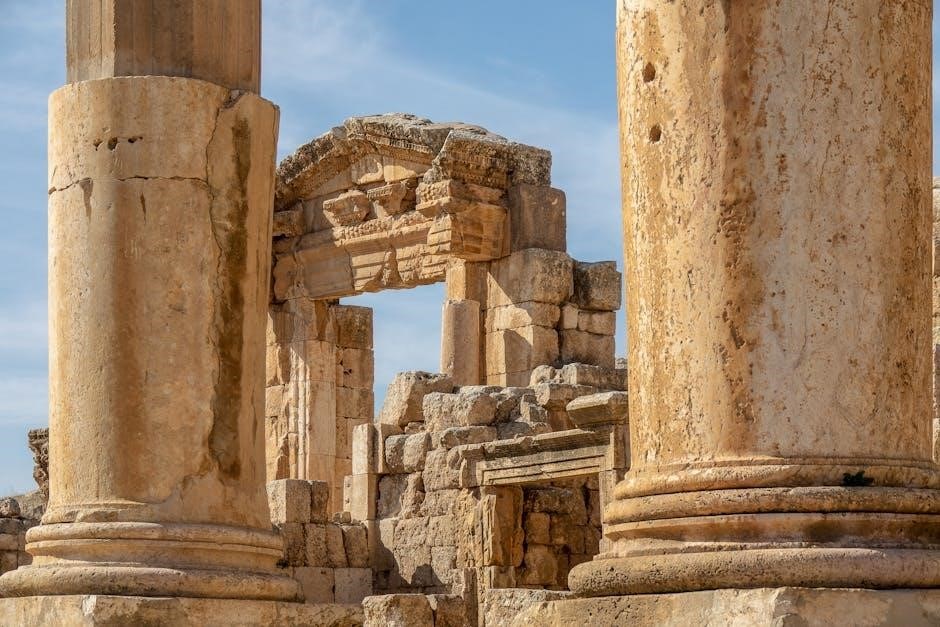
Ultimately, Persepolis’s legacy lies not only in its physical remains, but also in its ability to provoke ongoing dialogue about ancient history, imperial power, and the relationship between past and present. The accessible PDF resources ensure this legacy will continue to be explored for generations to come, solidifying its place in world history.